Javelina Jundred
Javelina has been described as a cross between Burning Man and ultrarunning, an analogy that feels well-earned.
I first visited in 2023 as an intern with CTS Trainright, helping to crew athletes at
Javelina Jeadquarters as they ran under nine-foot-tall skeletons, past fire dancers, and through a tunnel of costumed crew tents,
fairy lights, and rave music. Leaving the aid station, runners would strike out toward the horizon on a silent, sandy track
flanked only by stoic ancient saguaros. In the seemingly infinite expanse of arroyos and cholla cacti, the sun would be their
sole constant companion. I loved crewing at Javelina from the shaded, snack-filled CTS tent, but I simultaneously resolved never to
enter the race myself - I simply couldn't imagine why anyone would willingly sign up to run such a flat, sandy course in disgusting heat.
It seemed tortuous.
Fourteen months later, I registered myself to run the race with my partner Rachel, Rachel's dad, her siblings, and some friends.
We got a crew tent in Jeadquarters, not far from where I'd been stationed in 2023. My change of heart was driven entirely
by the prospect of bumming around with our posse. Each of them would be running one 20-mile lap, via the Jackass Night Run or as pacers (I would do five laps for the
100 miler - pacers are allowed for the last two). While point-to-point races like Leadville and JFK can be miserable to crew, Javelina
is a mind-bending party from start to finish. And so it was decided - we picked out matching costumes from The Fellowship of the Ring
and arrived in Arizona for an early Halloween. I was no longer intimidated by the desert, having run
100+ miles without water
through Washington's arid Columbia Basin the summer before, and I felt as though I was in my element.
The first 60 miles of the race were simply fun. I've always been enchanted by the hostile beauty of desert landscapes,
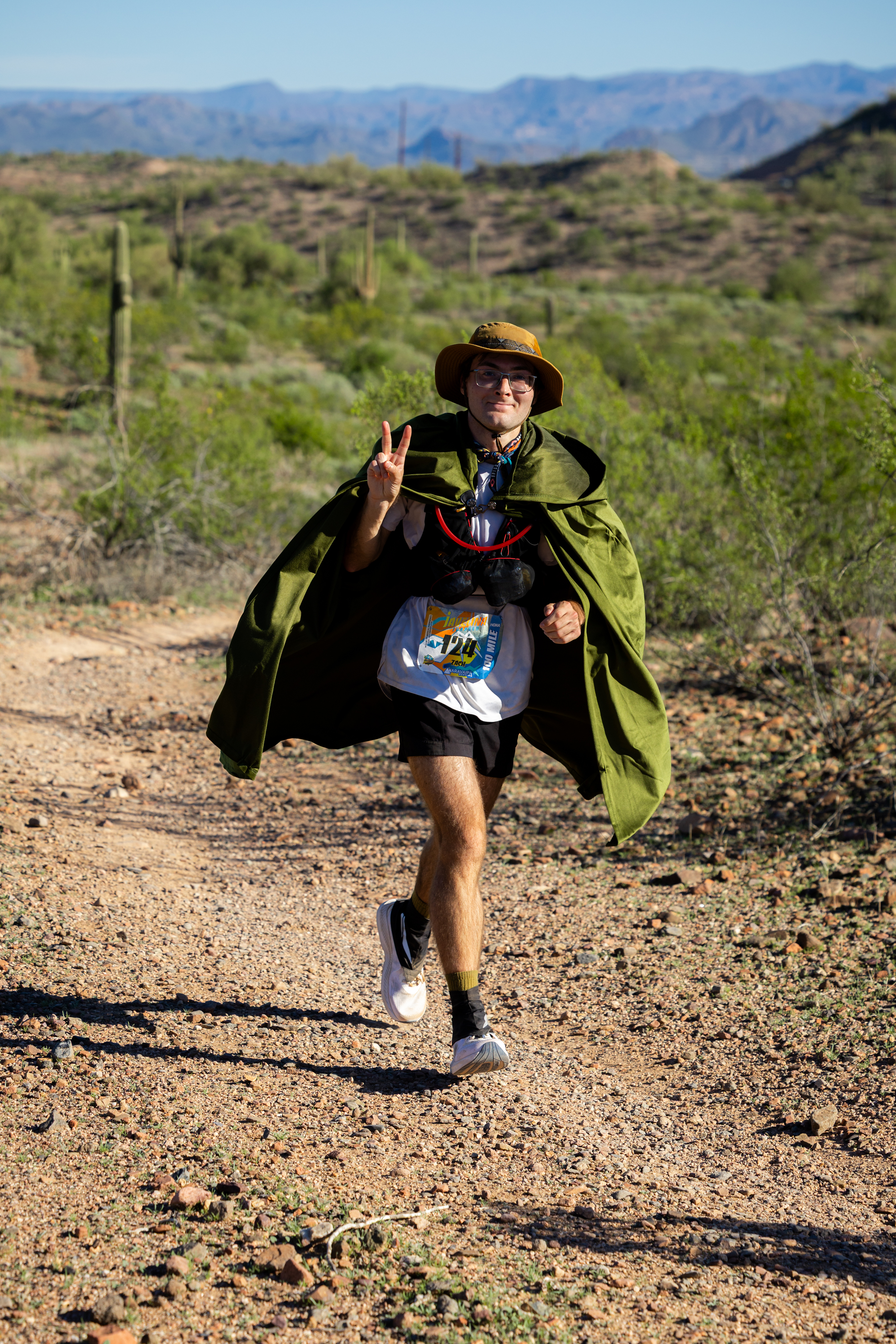
and flying through the canyons in a Frodo cloak brought a novel levity that was instantly matched by other
bemused racers out on the trail, despite the
commentators mistaking my costume for an unconventional tactical sunshade.
As night fell I was passed by Rachel in a light-up Sauron costume (she went on to win the Jackass
Night Race) and two fellow hobbits in matching cloaks, who came upon me as I was attempting to nap on a bed of jagged fist-sized rocks. Gandalf
and Gollum (who had been re-cast as a buff, mustachioed physical therapist in the form of Rachel's brother-in-law) guided me the exhausting final forty miles
back to Jeadquarters amid bumping music and dazzling lights. Most ultramarathoners race to seek extreme challenge or deeper self-realization.
This time, I bore little such lofty ideals - Javelina had proven to me that under the right circumstances, running 100 miles can mostly be good, honest fun.
(Photo credit: Howie Stern Photography).
Pemigewasset
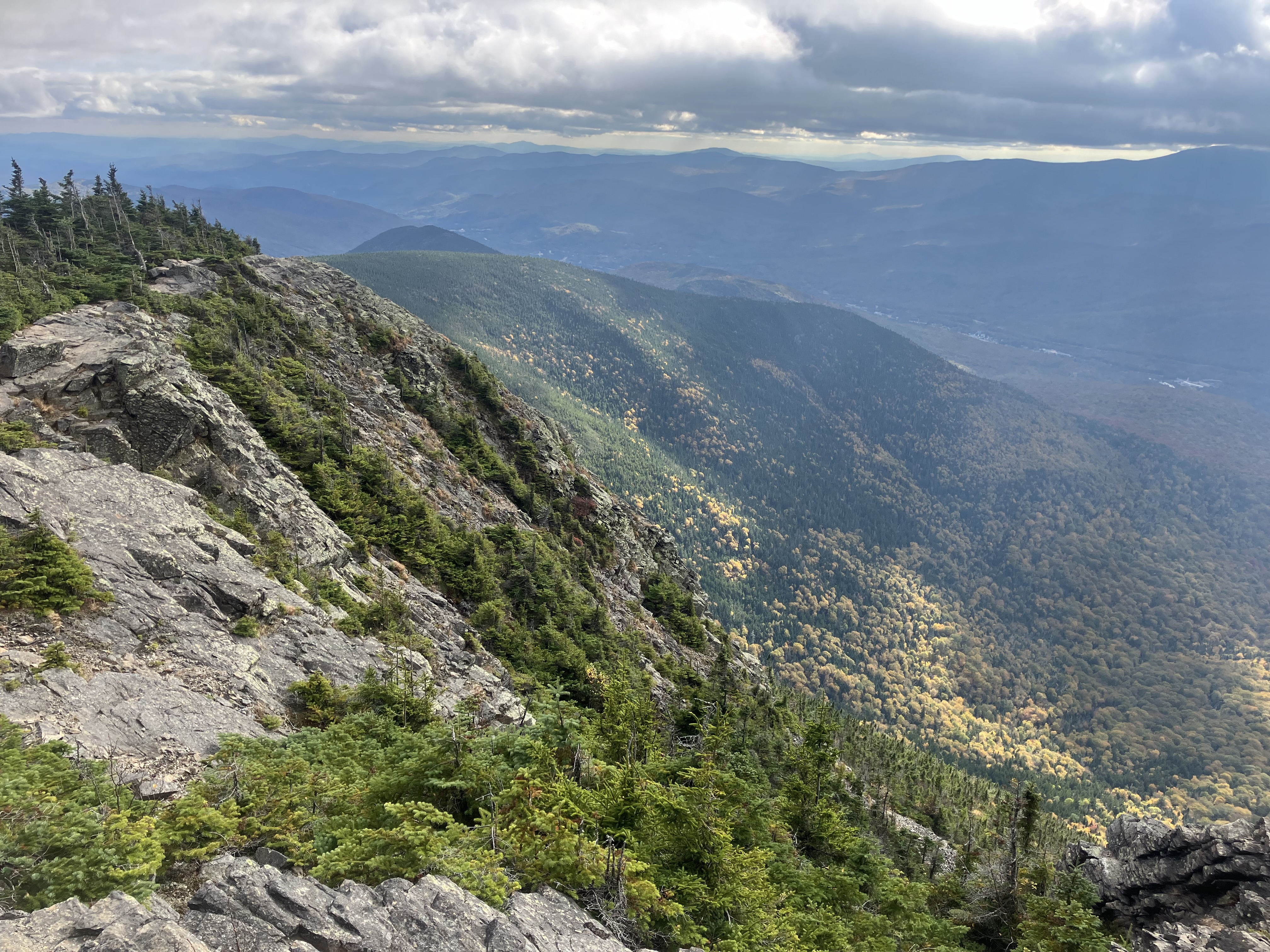
The Pemigewasset Loop in New Hampshire is, to me, a unique puzzle. I've never been particularly motivated by speed, but completing a fast Pemi is equal parts skill and strategy, and I find myself returning each summer to take another crack at the mountains. Like any good East Coast FKT, a fast Pemi requires good fitness, pacing, and the technical ability to run fast over steep, root-caged talus slopes slick with rain. However, directionality and water stops add significant strategic elements to the route. Since water stops are few and far between (and nonexistant on the western half of the loop), solving the Pemi becomes a matter of learning every creek crossing, seasonal waterfall, and transient high-altitude puddle big enough to filter water from after a recent rain. Knowing how much to carry, and how hard to push between segments, requires a delicate attunement between external factors (terrain, weather) and internal survival needs. The appeal of pitting my map knowledge and self-awareness against the unrelenting old bones of Appalachia never fails to be a rewarding, insightful challenge, and I expect I shall return to the Pemi for many years to come.
Leadville 100
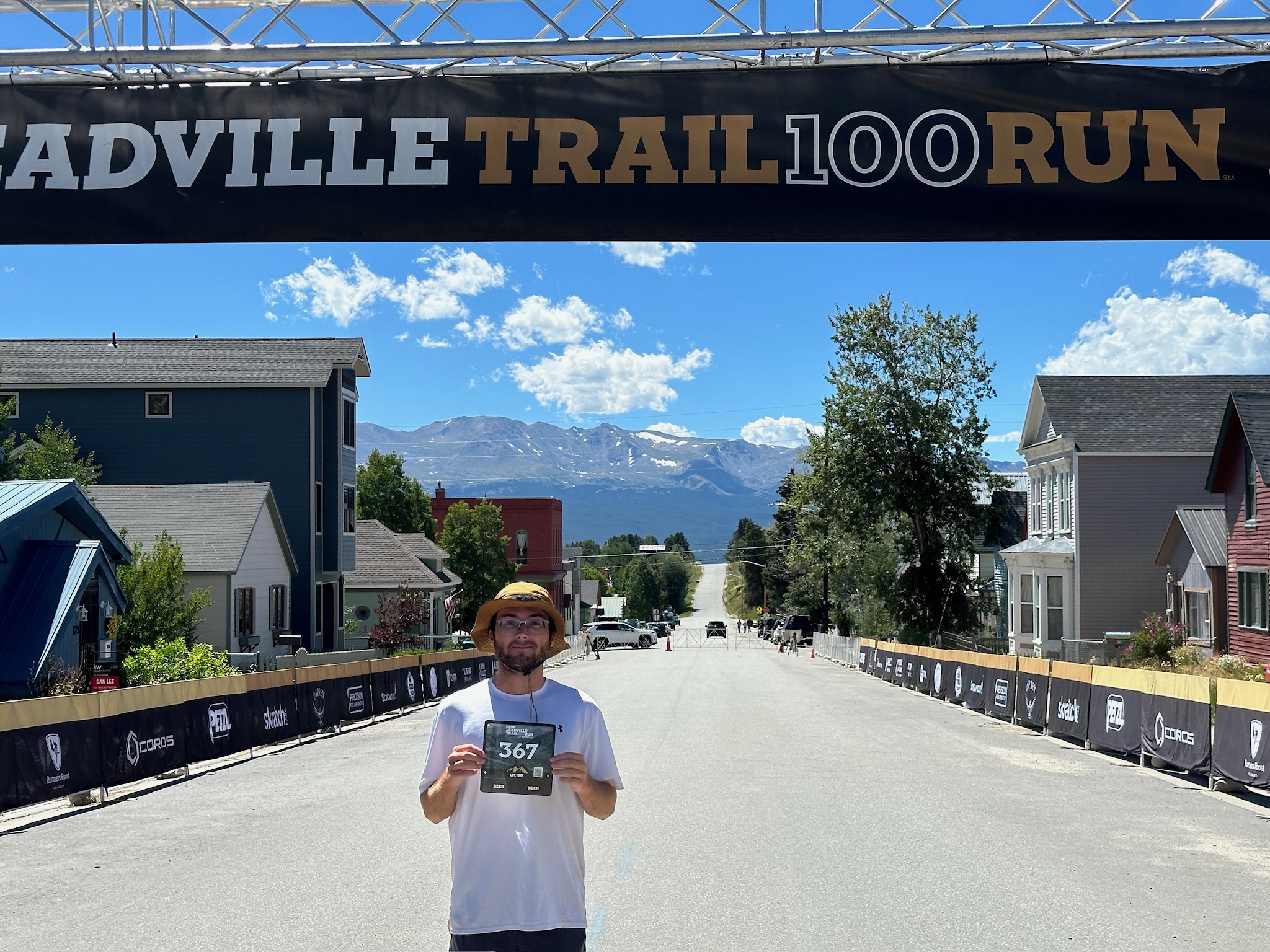
Leadville is a keystone of modern ultrarunning culture, legendary in the annals of our sport, and its aura is tangible from the moment
I step into town. It lingers in the air like some rugged, biblical spirit that lives only above 10,000 feet, and it manifests in
the reverence and sense of occasion that all 800 runners and I carry with us as we migrate through town for the pre-race meeting of the
2024 Race Across the Sky. Ken Chlouber stands in front of a curtain of 14,000' peaks and speaks with the earthy tones of an ancient
cowboy, summoning a promise of grit and comaraderie from deep within every runner. We stand to make our pledge. Too early the next
morning, we are off into the darkness. For me, the first 15 miles of the race are a slow conga line of runners whose headlamps steadily
bob in and out of the woods surrounding the trail - clearly many, myself included, had erred on the side of overhydration at altitude,
and under the moonlight we faithfully recreate a scene from
Monty Python's Weak Bladder Marathon.
As the sun rises, the majesty of the
surrounding mountains comes into view, and we race through thin air to Winfield Aid Station on the far side of Hope Pass. I've never had
to chase cuttoffs before, and it's terrifying. I had finished a 500-mile run across New York two weeks before the race, and a similar project
across Washington state earlier that summer, and I arrive at Winfield (the 50-mile turnaround point) less than an hour before the cuttoff
time with lead in my legs. Billy Yang said it best: there is no ultramarathon that begins at the start line. The true race begins when you are beat down, stripped raw,
and still have impossibly far to go. The moment your mind's eye can no longer see a certain path between you and the finish line is the moment the
gun goes off. It's the reason you sign up to run 100 miles. For me, the race started at Winfield and continued all through the next night
until dawn struck the shores of Turquoise Lake for a second time. The conga line of runners that had dispersed in the mountains yesterday
morning reappeared at the final climb into town, and I joined the stragglers making their hobbling pilgrimage back into Leadville.
JFK 50
Like many ultrarunners of my generation, I became obsessed with the sport after reading Christopher McDougall's Born to Run
and watching Billy Yang's The Why. These windows to pedestrian adventure came to me during the Covid winter of 2021, and trapped inside a concrete
dorm with little else to inspire action, I absorbed every vicarious drop of ultramarathon adventure I could find. I had been a mediocre and oft-injured
high school cross-country runner. I ran only casually in college, and I missed the team atmosphere and pure freedom that came from exploring with my
own two feet. The prospect of joining a community of colorful global adventurers who ran impossible distances spoke to me deeply, especially in the
face of a pandemic that presented the opposite reality.
Fast-forward eighteen months, and I had designed a bioengineering honors thesis that would allow me to test the applicability of traditional cardiorespiratory
models on participants of 50-mile races. I'd met some real, live ultrarunners - local friends who were also new to the sport - and read
Jason Koop's Training Essentials for Ultrarunning cover-to-cover in preparation for a UESCA coaching certification. However, I had still
never run more than 20 miles. Looming at the end of November was the JFK 50, which I had signed up to enter, but instead of training, I spent
most of the semester helping my friend Remy coordinate his
record-setting stadium flyover with an electric plane. The flight was scheduled for the same day as my race, and I was still coordinating lodging
for one of the pilots on the drive to bib pickup. Running JFK was hugely important to me, but I'd have to rely on book knowledge over
physical experience to get me through to the finish.
My parents, ever supportive, drove me to the start line in Boonsboro, Maryland, after an early 4am wakeup. From the back of a huge crowd
I waited in the darkness until, without much ceremony, someone in the distance shot a starting pistol and the mob was under way. Contrary to
all advice, I had woken up without breakfast, and as the sun began to defrost the autumn leaves along the road, I started spooning black beans
and rice into my mouth from a ziploc baggie. Typically, beans would be last on the list of rational foods to consume during a 50 mile race.
However, I had been eating up to four cans of black beans a day for many months (for the simple reason that they were cheap, and I was poor),
and I fancied myself a bean-eating machine. I reckon my fueling strategy worked. However, my lack of experience showed, and I blew up on the tow
path at mile 28. I had simply never learned to run slowly - ultramarathon "slow" is a different gear entirely from what most other runners,
and myself at the time, typically considered "slow". I sat with my parents for about 45 minutes, and seriously considered what I was doing in the
race to begin with. In that moment, I wasn't having fun. The fantasy that I had painted in my mind for years, about what it was like to
be an ultramarathon runner, was entirely different from the reality of JFK.
I think the biggest reason I walked out of the aid station was because my
parents had driven all the way down from Albany to support me, and they deserved better than a halfhearted DNF. I tried to convince myself that this
was the challenge I had signed up for. Somewhere along the canal path, a chipper round-faced man exclaimed "Hey, it's okay to walk! You've
been runnin' for almost four hours!" I almost cried. Of course, he was right, but walking certainly didn't feel like a success.
Eventually my walk turned into a jog, and the jog turned into a brisk run, which turned into a walk again because I still hadn't learned to pace
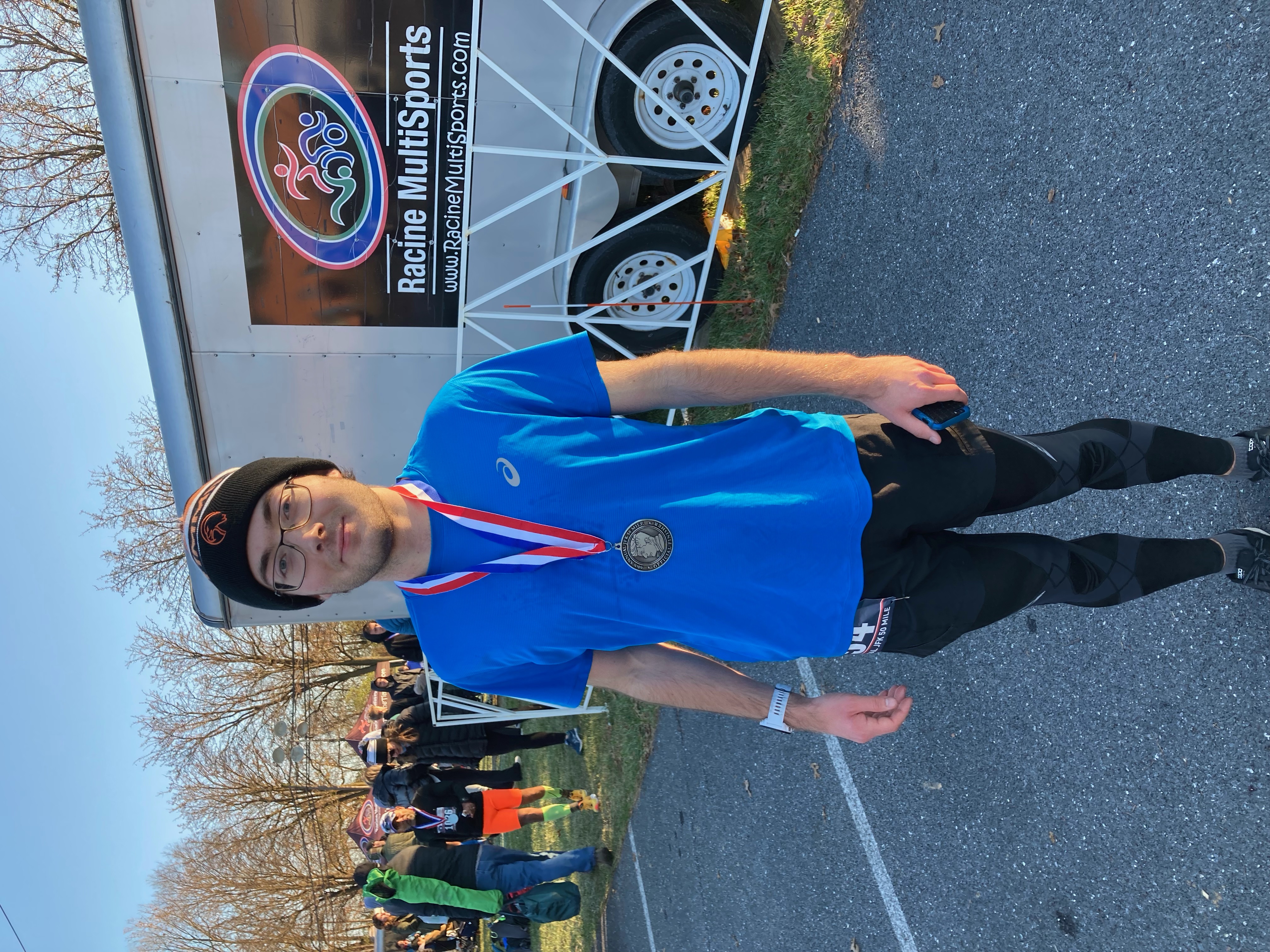
myself. Hours later, the death march came to an end as I motivated my stiff and aching joints into a jog through the inflatable finisher's arch.
The race had beat me up, and it wasn't everything I had envisioned, but I was standing on the right side of the finishing chute and I knew I could do better.
It was an uninspiring first step, but I've since found incredible opportunity and community through the world of ultramarathons,
and it has since changed my life. I'm glad I stayed in the race.